Real case studies from The Berkley Center — PCOS, Endometriosis, Diminished Ovarian Reserve, and Natural Conception
Failed IVF cycles are among the most emotionally and physically demanding experiences a person can face. Yet for many patients, repeated failure is not a dead end — it is a signal that something underlying has not yet been addressed.
At The Berkley Center for Reproductive Wellness in New York City, acupuncture and customized herbal medicine are used to treat the physiological conditions that compromise egg quality, impair ovulation, cause uterine inflammation, and reduce the chances of successful embryo implantation. The following three case studies illustrate what that integrative approach can achieve.
Patient: 32-year-old woman | Diagnosis: PCOS | History: 3 failed IVF cycles, poor egg quality, uterine inflammation, irregular menses | Outcome: Natural conception
Polycystic ovary syndrome (PCOS) is one of the most common causes of female infertility, yet its effects go far deeper than irregular periods. PCOS disrupts the hormonal architecture of the entire reproductive system — elevated androgens, abnormal LH:FSH ratios, and elevated insulin levels create an environment in which follicles begin to develop but consistently fail to reach full maturity.
This leads to anovulation (absent ovulation), poor egg quality, and — in this patient’s case — a chronically inflamed uterine lining that prevented embryo implantation even in IVF cycles. Three attempts had failed. The eggs that were retrieved were chromosomally abnormal, the embryos had low developmental potential, and the endometrium was not receptive.
Over six months of weekly acupuncture, physiological changes were measurable:
Herbal medicine was individualized to this patient’s specific hormonal and inflammatory profile. The botanical formulas were designed to:
At the six-month mark, this patient conceived naturally — without IVF. Her androgen levels had declined, her menstrual cycle had normalized, her endometrium appeared improved on ultrasound, and her eggs had matured to a fertilizable state.
Patient: 32-year-old woman | Diagnosis: Endometriosis | History: 3 failed IVF cycles, poor egg quality, uterine inflammation | Outcome: Conception achieved
Endometriosis creates a toxic environment for reproduction at multiple levels simultaneously. Endometriotic lesions shed pro-inflammatory fluid into the peritoneal cavity, generating reactive oxygen species that directly damage oocyte DNA and mitochondrial function. Women with endometriosis have measurably lower egg quality and fertilization rates — which explains why this patient’s IVF cycles had failed repeatedly despite standard care.
The condition is also strongly estrogen-driven. Impaired estrogen clearance — through liver dysfunction, gut dysbiosis, and compromised methylation pathways — allows estrogen to accumulate, fueling lesion growth and sustaining the inflammatory cycle. The result is an endometrium that is hostile to implantation even when embryos are transferred.
This patient’s herbal protocol specifically targeted estrogen metabolism and the oxidative damage driving poor oocyte quality:
Over six months, pelvic pain substantially decreased, estrogen metabolism improved, inflammatory markers normalized, and oocyte quality improved on subsequent assessment. Endometrial receptivity was restored. Conception was achieved at the six-month mark.
Patient: 39-year-old woman | Diagnosis: Diminished ovarian reserve (DOR), poor egg quality | History: 3 failed embryo transfers | Outcome: Successful pregnancy
Diminished ovarian reserve (DOR) at 39 presents a specific and compounding set of challenges. Low antral follicle count and reduced AMH mean fewer eggs are available per retrieval cycle. But the deeper problem — the reason three embryo transfers had failed — is mitochondrial dysfunction.
Mitochondria provide the energy required for chromosomal segregation and early embryonic development. As women age, mitochondrial DNA accumulates mutations and energy output declines. The result is chromosomally abnormal eggs that fail to implant, miscarry, or result in developmental arrest. Compounding this, oxidative stress in the aging ovarian environment further damages oocyte DNA, while declining estrogen production from the ovaries can produce a thin or poorly vascularized uterine lining.
Over six months, FSH declined meaningfully, AMH showed modest but clinically significant improvement, and antral follicle count increased slightly. The subsequent egg retrieval yielded higher-quality embryos with improved fertilization rates. The endometrial lining improved in both thickness and vascular pattern. The embryo transfer resulted in a confirmed pregnancy.
The outcomes in these cases are consistent with a growing body of clinical research on integrative approaches to reproductive medicine:
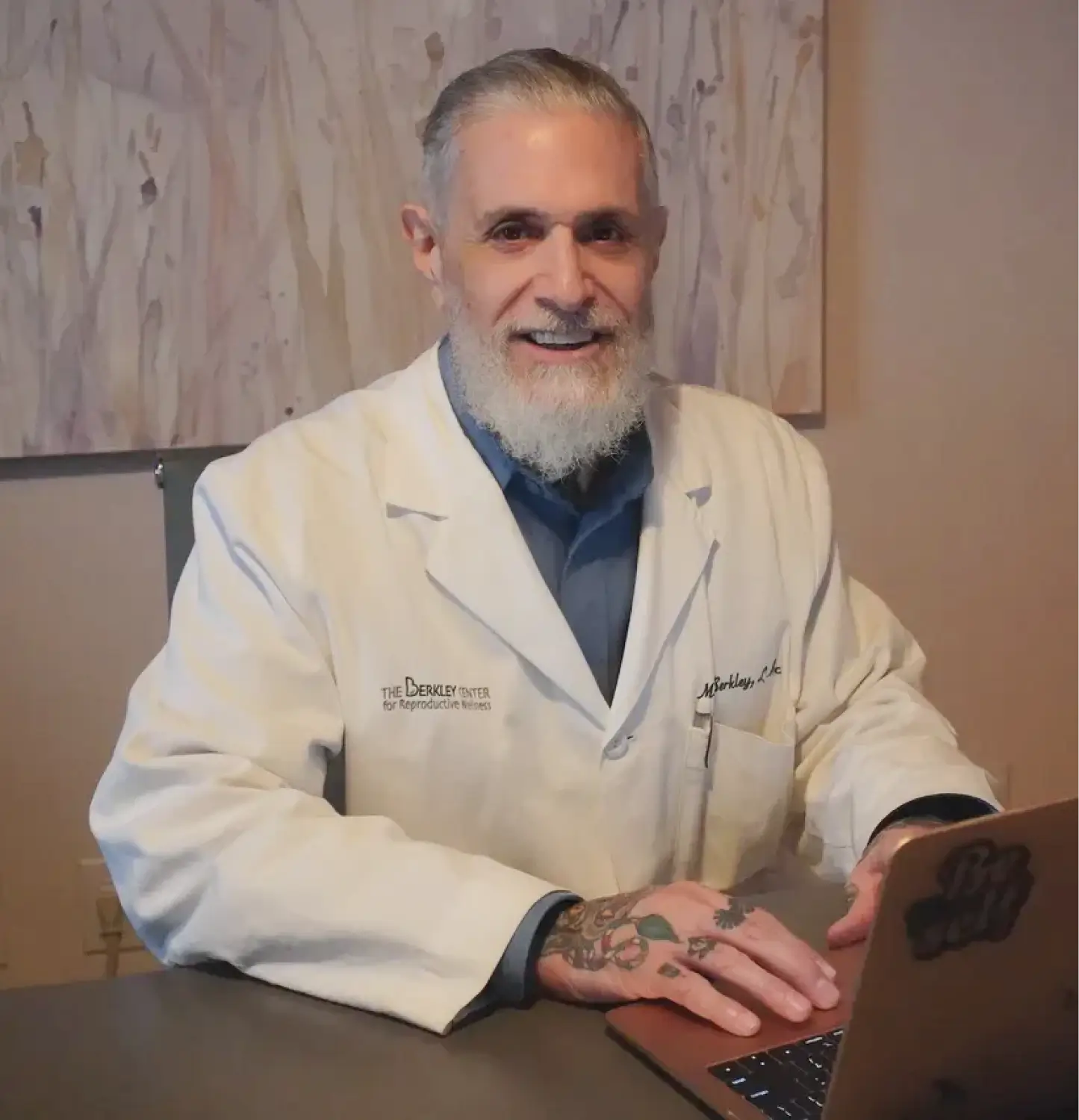
The Berkley Center for Reproductive Wellness, founded and directed by Mike Berkley, L.Ac., FABORM, is one of the most established integrative fertility practices in the United States. Located in Midtown Manhattan, the practice specializes exclusively in reproductive medicine — combining acupuncture, customized botanical medicine, nutritional supplementation, and low-level light therapy into individualized treatment plans that address the root causes of infertility.
Mike Berkley is a board-certified Fellow of the American Board of Oriental Reproductive Medicine (FABORM), a distinction held by a small percentage of practitioners nationally, reflecting advanced clinical expertise specifically in reproductive medicine.
The Berkley Center works collaboratively with reproductive endocrinologists and IVF clinics throughout the New York metropolitan area, serving as an evidence-supported complement to conventional fertility treatment. Whether preparing for IVF, recovering from failed cycles, or pursuing natural conception, every patient receives a comprehensive evaluation and an individualized plan built around their unique diagnosis and goals.
If you have experienced failed IVF cycles, failed embryo transfers, poor egg quality, endometriosis, PCOS, or diminished ovarian reserve — contact The Berkley Center today.