What Men Need to Know About Count, Motility, Morphology, and DNA Fragmentation
When a couple is struggling to conceive, the conversation often centers on the woman — her hormones, her egg quality, her cycle. But the reality is that male factor fertility issues are responsible for roughly half of all cases of infertility. And yet, men are frequently undertested and undertreated.
The good news: sperm health is surprisingly responsive to change. Unlike eggs, which are largely fixed from birth, sperm are produced fresh every 72 to 90 days. That means the lifestyle choices, nutritional habits, and treatments a man pursues today can directly influence the sperm used in conception three months from now.
At the Berkley Center for Reproductive Wellness in New York City, we specialize in integrative reproductive medicine — combining acupuncture, herbal medicine, targeted supplementation, and low-level light therapy to optimize fertility for both partners.
In this article, we focus on what acupuncture, and herbal medicine can do specifically for men, and what the research says about these approaches.
When a semen analysis is performed, four main parameters are evaluated. Understanding what they mean is the first step toward improving them.
This refers to the total number of sperm present in a given sample. A normal count is generally considered to be at least 16 million sperm per milliliter. A low count (called oligospermia) reduces the odds that a sperm will successfully reach and fertilize an egg.
Motility describes how well sperm move. Sperm need to swim forward with purpose to travel through the cervix, uterus, and into the fallopian tubes to reach an egg. Poor motility (asthenospermia) means the sperm may be present in adequate numbers but simply can’t make the journey.
Morphology refers to the size and shape of sperm. Normal sperm have a specific oval head and a long, straight tail. Abnormally shaped sperm (teratospermia) may have difficulty penetrating an egg, even if they reach it. Morphology is graded using Kruger strict criteria; a normal result is ≥4% normal forms.
This is perhaps the most overlooked — and most important — parameter of all. DNA fragmentation measures the integrity of the genetic material inside each sperm. High fragmentation (above 15–25%, depending on the lab) is associated with fertilization failure, poor embryo development, recurrent miscarriage, and failed IVF cycles — even when count, motility, and morphology look normal. A standard semen analysis does not test for DNA fragmentation; it requires a separate test called the Sperm DNA Fragmentation Index (DFI).
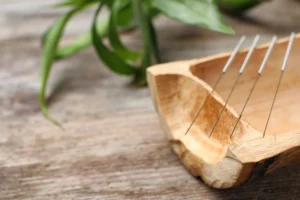
Acupuncture involves the placement of fine, sterile needles at specific points on the body. From a physiological standpoint, it works through several mechanisms relevant to sperm production and quality:
Herbal medicine offers a complementary set of tools that can address the root causes of sperm abnormalities. Practitioners at the Berkley Center use evidence-informed formulas drawing on both classical traditions and modern research.
Herbal formulas are always tailored to the individual. We never use a one-size-fits-all approach. A careful intake is conducted to understand the full clinical picture before any formula is prescribed.
Sperm DNA fragmentation has emerged as one of the most clinically significant fertility parameters, yet it remains under-discussed and undertested. Men can have a completely normal semen analysis and still have fragmentation rates high enough to compromise conception.
The primary causes of high DNA fragmentation include:
Both acupuncture and herbal medicine have direct, evidence-supported effects on oxidative stress reduction — which is why they are particularly effective for men with high fragmentation. Many of our patients see meaningful reductions in their DFI within one full sperm cycle (approximately 90 days).
| Case Study 1: From “Failed IVF” to Successful Pregnancy David, 38, came to the Berkley Center after two failed IVF cycles with his wife. His semen analysis showed normal count and motility, but sperm DNA fragmentation testing — which his reproductive endocrinologist had not ordered — revealed a DFI of 42%, far above the threshold associated with IVF success. David began twice-weekly acupuncture and was started on a customized herbal formula focused on reducing oxidative stress and supporting testicular health. He also made targeted dietary changes and added specific antioxidant supplements. After three months of treatment, David’s DFI dropped to 14% — within the normal range. His wife’s third IVF cycle resulted in the transfer of three high-quality blastocysts. She is now 22 weeks pregnant with their first child. |
| Case Study 2: Low Count and Poor Motility Reversed Naturally Marcus, 34, had been trying to conceive with his partner for 18 months. His semen analysis showed a count of 8 million per milliliter (well below normal) and motility of only 28% forward progression. His reproductive urologist offered no treatment other than proceeding directly to IVF with ICSI. Marcus came to us seeking a more proactive approach. Over the course of four months, he received weekly acupuncture and took a personalized herbal formula designed to support sperm production and motility. At his four-month follow-up semen analysis, Marcus’s count had risen to 22 million per milliliter, and his forward motility had improved to 48% — both now within normal ranges. He and his partner conceived naturally two months later. |
Note: Patient names have been changed to protect privacy. Results vary and are not guaranteed. These cases are presented for illustrative purposes and reflect the types of outcomes we have observed clinically.

Every male fertility patient at the Berkley Center begins with a comprehensive intake that reviews:
From there, we develop an individualized treatment plan that may include acupuncture, herbal medicine, nutritional guidance, supplementation protocols, and low-level light therapy (LLLT), which has emerging evidence for improving sperm motility and DNA integrity.
We also work collaboratively with your reproductive endocrinologist or urologist when you are pursuing IUI, IVF, or other assisted reproductive technologies. Many REI practices now recognize the value of integrative support alongside conventional treatment.
The following peer-reviewed studies support the clinical effectiveness of acupuncture and herbal medicine for male fertility. We encourage patients to review these with their medical team.
Acupuncture
Herbal Medicine and Botanical Compounds
Sperm DNA Fragmentation
| Ready to Take the Next Step? Improving sperm quality is absolutely possible — and you don’t have to figure it out alone. At the Berkley Center for Reproductive Wellness, we create individualized treatment plans using acupuncture, herbal medicine, targeted supplementation, and low-level light therapy to optimize male fertility from the inside out. |
We serve patients throughout New York City and welcome couples and individuals at any stage of their fertility journey — whether you’re just starting to explore options or actively preparing for IUI, IVF, or natural conception. 📞 Schedule a Consultation: www.berkleycenter.com |