If you have been told you have poor egg quality or low ovarian reserve, you may feel like your options are limited. But emerging science and decades of clinical experience suggest that the health of your eggs is not fixed — and that targeted therapies, including Low-Level Light Therapy (LLLT), may meaningfully improve your fertility outcomes.
At The Berkley Center for Reproductive Wellness in Midtown East, New York City, we have integrated LLLT into our comprehensive, evidence-informed fertility protocols for over 25 years. This article explains what LLLT is, how it improves egg quality at the cellular level, and why this matters especially for women with diminished ovarian reserve.
Low-Level Light Therapy — also called photobiomodulation — uses specific wavelengths of red and near-infrared light to stimulate biological processes at the cellular level. Unlike lasers used in surgery or aesthetic procedures, LLLT does not generate heat or damage tissue. Instead, it delivers gentle, targeted light energy that is absorbed by cells to enhance their natural function.
LLLT has been studied extensively in the context of tissue healing, inflammation reduction, and neurological recovery. More recently, its application in reproductive medicine — particularly for improving egg quality and ovarian function — has gained significant scientific attention.
The human egg cell (oocyte) contains more mitochondria than almost any other cell in the body — up to 100,000 per egg. This is not coincidental. Mitochondria are responsible for generating ATP (adenosine triphosphate), the primary energy currency of the cell. The processes required for a healthy egg — chromosomal division, fertilization, and early embryo development — all demand enormous amounts of ATP.
When mitochondrial function is impaired, egg quality suffers. Poor mitochondrial output has been linked to:
Mitochondrial dysfunction worsens with age and is a primary driver of the decline in egg quality that occurs as women get older — and that disproportionately affects women with diminished ovarian reserve (DOR) or premature ovarian aging.
LLLT works by targeting cytochrome c oxidase (CCO), a key enzyme in the mitochondrial electron transport chain. When specific wavelengths of red and near-infrared light are absorbed by CCO, a cascade of beneficial effects follows:
The net result is an egg with greater energetic capacity, reduced oxidative damage, and improved chromosomal stability — all of which translate directly into better fertilization rates, higher-quality embryos, and stronger implantation potential.
Egg quality is the single most important determinant of embryo quality. A chromosomally normal egg produces a euploid embryo — one with the correct number of chromosomes — which has substantially higher rates of successful implantation and live birth compared to aneuploid (chromosomally abnormal) embryos.
Poor egg quality, particularly in the context of diminished ovarian reserve, is one of the most challenging problems in reproductive medicine. Conventional treatments — including IVF with high-dose ovarian stimulation — cannot improve the intrinsic quality of eggs already in the ovary. This is why adjunctive approaches that address the underlying biology of mitochondrial function represent a meaningful advancement.
By improving mitochondrial health, LLLT addresses the root cause of poor egg quality rather than simply attempting to retrieve more eggs from a diminished reserve. Even modest improvements in egg quality — particularly in terms of chromosomal integrity — can substantially increase the probability of a successful embryo transfer and live birth.
Women with diminished ovarian reserve (DOR) — characterized by a low antral follicle count (AFC) and/or low Anti-Müllerian hormone (AMH) levels — face a dual challenge: fewer eggs available for retrieval and often poorer egg quality. This makes every egg cycle critically important.
LLLT is particularly relevant for this population because it targets quality rather than quantity. While we cannot create new eggs, we can optimize the function of the eggs that remain. Research from Scandinavia — particularly a landmark Norwegian study — demonstrated that LLLT applied to the ovarian region resulted in measurably improved IVF outcomes, including in older women and those with poor responder profiles.
At the Berkley Center, LLLT is offered as part of a comprehensive protocol that may also include:

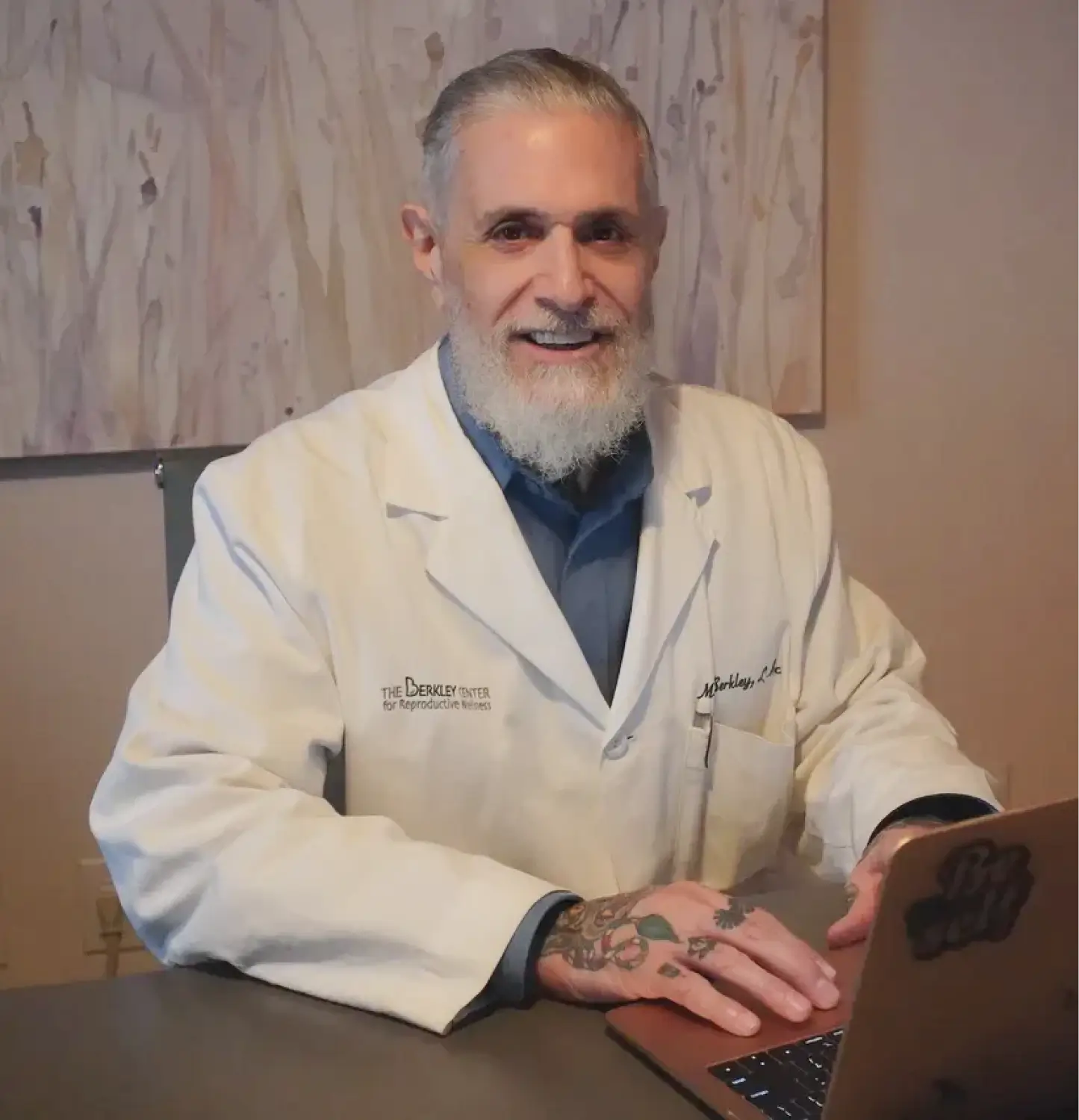
The Berkley Center for Reproductive Wellness, founded by Mike Berkley, L.Ac., FABORM, has been at the forefront of integrative reproductive medicine in New York City for over two decades. Located in Midtown East at 16 East 40th Street, the Berkley Center provides a bridge between conventional reproductive medicine and evidence-based complementary therapies.
Mike Berkley is one of the most experienced and respected acupuncturists specializing in reproductive medicine in the United States. A Fellow of the American Board of Oriental Reproductive Medicine (FABORM), he has treated thousands of patients navigating the challenges of infertility — from unexplained infertility and recurrent pregnancy loss to diminished ovarian reserve and failed IVF cycles.
From the earliest days of his practice, Mike recognized that reproductive success requires optimizing the whole patient: the hormonal environment, the immune system, the quality of the gametes themselves, and the uterine environment in which an embryo must implant and grow. This philosophy has guided the development of highly individualized, integrative treatment protocols that today include acupuncture, Chinese herbal medicine, nutraceuticals, and Low-Level Light Therapy.
The Berkley Center maintains close collaborative relationships with leading reproductive endocrinologists throughout the New York metropolitan area. This allows patients to receive the full benefit of both conventional and integrative approaches, with providers who communicate and coordinate care in support of each patient’s individual goals.
Whether you are preparing for your first IVF cycle, recovering from a failed transfer, or exploring your options after a diagnosis of diminished ovarian reserve, the Berkley Center offers the expertise, the technology, and the compassionate support you need.
Ready to Take the Next Step?
If you have been diagnosed with poor egg quality, low ovarian reserve, or have experienced failed IVF cycles, Low-Level Light Therapy may be an important part of your path forward.
Schedule a Consultation with Mike Berkley, L.Ac., FABORM
The Berkley Center for Reproductive Wellness
16 East 40th Street, New York, NY 10016
Phone: 212-685-0985
Website: www.berkleycenter.com
Take the first step toward the family you deserve.
The following peer-reviewed studies and clinical resources support the efficacy of Low-Level Light Therapy for mitochondrial improvement, egg quality, and fertility outcomes:
Low-Level Light Therapy and Reproductive Outcomes
Mitochondria and Egg Quality
Egg Quality and Ovarian Reserve
CoQ10 and Mitochondrial Support