For many women, trying to conceive can feel like riding an emotional rollercoaster—especially when cycles, treatments, and even IVF attempts don’t go as hoped. Acupuncture offers a gentle, science-backed way to support the body’s natural fertility, and it can work alongside modern reproductive medicine rather than instead of it.
This is the approach that Mike Berkley, L.Ac., FABORM has championed for decades at The Berkley Center for Reproductive Wellness in Midtown East, NYC—the first complementary medicine center in the United States to specialize exclusively in treating reproductive challenges.
Why Blood Flow, Inflammation, and Stress Matter for Fertility
Before we talk about acupuncture, it helps to understand what the body needs in order to conceive and maintain a healthy pregnancy:
- The ovaries need a rich blood supply to nourish developing follicles and eggs.
- The uterine lining (endometrium) needs healthy circulation and a calm immune environment to allow an embryo to implant and grow.
- The nervous system and stress hormones must be in balance so that the body is in a “rest, repair, and reproduce” state—not fight-or-flight mode.
Acupuncture influences all three of these areas through measurable changes in circulation, inflammation, and stress chemistry.
Nitric Oxide and Vasodilation: Opening The Microcirculation
One of the key ways acupuncture works is by increasing a tiny gas molecule called nitric oxide (NO) in the tissues where the needles are placed.
Nitric oxide:
- Signals blood vessels to relax and widen (this is called vasodilation)
- Improves microcirculation—blood flow in the smallest vessels
- Helps more oxygen, nutrients, and hormones reach the tissue
When appropriate acupuncture points are used, this improved circulation can benefit:
- The ovaries, supporting the environment in which eggs are maturing
- The uterine lining, helping it become thicker, softer, and more receptive to implantation
You can think of it as upgrading narrow, slow side streets into smoother, wider avenues for blood flow.

Improved Hemodynamics: Better Blood Flow to the Uterus and Ovaries
Doctors often measure uterine blood flow using Doppler ultrasound, which shows how easily blood moves through the uterine arteries. High resistance means the uterus is harder to “feed.”
Acupuncture has been shown to:
- Lower resistance in the uterine arteries
- Improve blood flow to the uterus and, indirectly, to the ovaries
- Support a healthier, more receptive endometrial lining
For women doing IVF, IUI, or trying naturally, better pelvic blood flow can support:
- Higher-quality eggs over time
- A more robust uterine lining
- A more stable environment for embryo implantation and early pregnancy
At The Berkley Center, improving pelvic hemodynamics is a core therapeutic goal for many treatment plans.
Calming Inflammation: Helping the Immune System Support, Not Sabotage
Many reproductive issues—such as endometriosis, some forms of PCOS, recurrent implantation failure, and unexplained infertility—have an inflammatory component. In these situations, certain chemical messengers called inflammatory cytokines are elevated, and they can interfere with:
- Egg development
- Hormone signaling
- The ability of the uterine lining to welcome and tolerate an embryo
Acupuncture has been shown to:
- Reduce pro-inflammatory cytokines (the “gas pedal” of inflammation)
- Increase anti-inflammatory cytokines (the “brakes” of inflammation)
- Support a more balanced immune response
In practical terms, this means acupuncture can help shift the internal environment from “on fire” to “calmer and more welcoming”—especially important for women with endometriosis, chronic pelvic inflammation, or recurrent loss.

Cortisol and Stress: Why Relaxation Is Not Just “Nice to Have”
Fertility is tightly linked to the brain’s stress and hormone centers. When stress is chronic, the hypothalamic–pituitary–adrenal (HPA) axis pumps out stress hormones, especially cortisol.
Chronically elevated cortisol can:
- Disrupt the brain’s control over FSH, LH, and GnRH, which are essential for normal ovulation
- Reduce blood flow to the uterus through increased sympathetic (“fight or flight”) tone
- Alter immune responses, making implantation more difficult
Acupuncture helps by:
- Activating the parasympathetic nervous system (“rest and digest”)
- Lowering cortisol levels and smoothing out stress responses
- Improving sleep, mood, and overall resilience
For a woman going through fertility treatments, this is not just about “feeling calmer.” Lowering stress and cortisol is physiologically meaningful: it helps the body prioritize reproduction rather than survival.
Acupuncture With IVF and Natural Conception
Acupuncture can be used:
- Before and during IVF to support blood flow, reduce anxiety, and improve endometrial receptivity
- In women trying naturally to support regular ovulation, better egg quality over time, and a healthier uterine environment
- Alongside conventional medications for PCOS or endometriosis as part of an integrated plan
While research results vary from study to study, a consistent pattern emerges:
- Acupuncture improves factors that matter for fertility—circulation, inflammation, stress hormones, and sometimes hormonal balance itself.
- For many women, it can modestly improve pregnancy outcomes, especially when delivered as a course of care rather than a single “day-of-transfer” session.
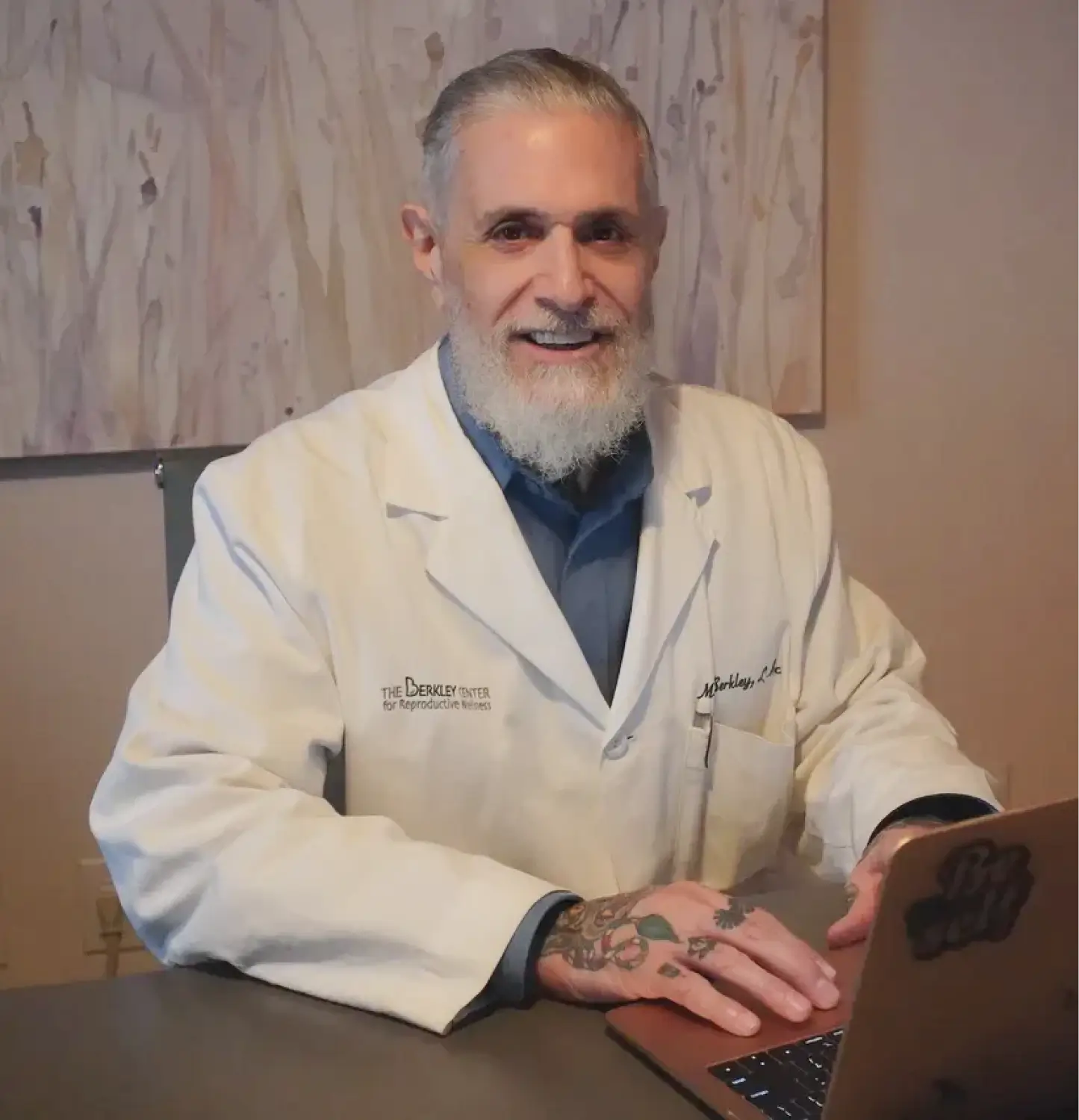
Mike Berkley and The Berkley Center for Reproductive Wellness
Mike Berkley, L.Ac., FABORM is a pioneer in the field of fertility acupuncture and integrative reproductive medicine.
Highlights of his contribution:
- First in the U.S. to specialize exclusively in fertility acupuncture: The Berkley Center for Reproductive Wellness was the first complementary medicine center in the United States devoted solely to treating reproductive challenges, both female and male.
- Two decades of focused experience: For over 25 years, Mike has worked almost exclusively with patients facing infertility, recurrent pregnancy loss, endometriosis, PCOS, diminished ovarian reserve, male factor infertility, and more.
- East–meets–West collaboration: Mike works closely with reproductive endocrinologists, OB/GYNs, urologists, and other specialists. His approach is not “either/or,” but integrative—using acupuncture and Chinese herbal medicine to support and enhance what modern reproductive medicine is doing.
- Personalized, data-informed care: Treatment plans at The Berkley Center are driven by both Western diagnostics (labs, imaging, IVF history) and Chinese medicine diagnosis The goal is to address each patient’s unique patterns rather than applying a one-size-fits-all protocol.
At The Berkley Center, acupuncture is not viewed as a mystical or vague therapy. It is understood in modern terms:
- Improving nitric oxide production and vasodilation
- Enhancing hemodynamics in the ovaries and uterus
- Modulating inflammation and immune balance
- Reducing stress and cortisol, supporting hormonal harmony
All of this is done with one core aim: to help more women and couples achieve healthy, full-term pregnancies.
What to Expect if You Work With The Berkley Center
A typical fertility-focused acupuncture plan with Mike Berkley and his team may include:
- A detailed review of your fertility history, labs, and treatment plans
- A Chinese medicine assessment
- Regular acupuncture treatments
- Recommendations for Chinese herbal medicine when appropriate
- Guidance on lifestyle, nutrition, and stress reduction to support treatment goals
The intention is not to replace your reproductive endocrinologist, but to give your body every advantage—better blood flow, calmer inflammation, lower stress hormones, and a more receptive uterine environment.
If you’re struggling with infertility, recurrent pregnancy loss, or repeated IVF failure, acupuncture at The Berkley Center for Reproductive Wellness can be a powerful, science-informed ally on your path to parenthood.
www.berkleycenter.com